Bidirectional leadscrew or ballscrew
Introduction:
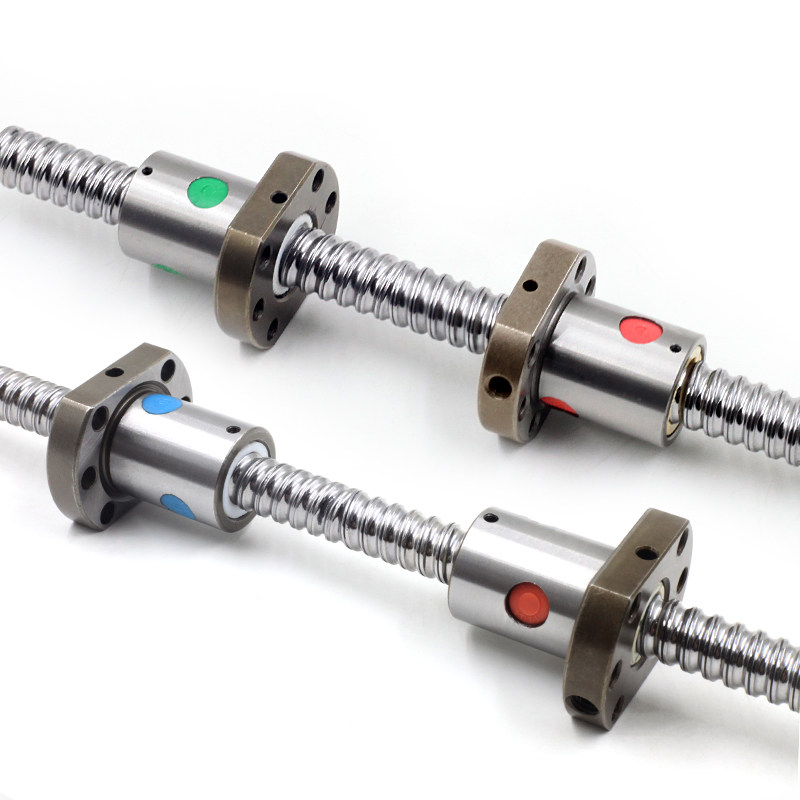
Precision bi-directional Lead Screws or Ball Screws can achieve the function of close and opening, positioning and centering location on a single axis, and offer the precision grade of C3 or C5.

The bidirectional lead screw 0802 diameter 8mm and 2mm pitch/lead
The screw nuts are included, for Tr8*2 it is Square, and for Tr8*4 it is Round shape

Left and right hand ball screw
Bidirectional ball screw 1605 diameter 16mm and 5mm pitch/lead

Smaller diameter 0802, 1002, 1004, 1202, 1204 Customized bidirectional or left and right hand Ground Ball Screws are available on request.


Left and right hand lead screw
How to describe such a lead screw or ball screw, it's been difficult, there is No problem to call it a left-hand and right-hand screw, But it can Not be identified as one screw. Bidirectional a great word is found for the lead screw and ball screw. RobotDigg has used this kind of bidirectional ball screw for a clamping linear actuator. Other applications are waiting for your development.
What's the difference between a bidirectional screw with a self-reversing or reciprocating screw?
The bidirectional screw is from two directions to clamp or open, while the reciprocating screw is just working in one direction and will self-reverse at the end of both ends.
Ball screw with RH and LH nut
A Bidirectional Ball Screw (also referred to as a Right-Hand and Left-Hand / RH-LH Ball Screw) is a specialized mechanical linear actuator designed to convert rotational motion into opposing linear motion along a single shaft.
By featuring both right-hand and left-hand threads cut onto opposing halves of the same shaft, a single rotation of the screw causes two opposing ball nuts to move synchronously—either toward each other (clamping/closing) or away from each other (opening/centering).
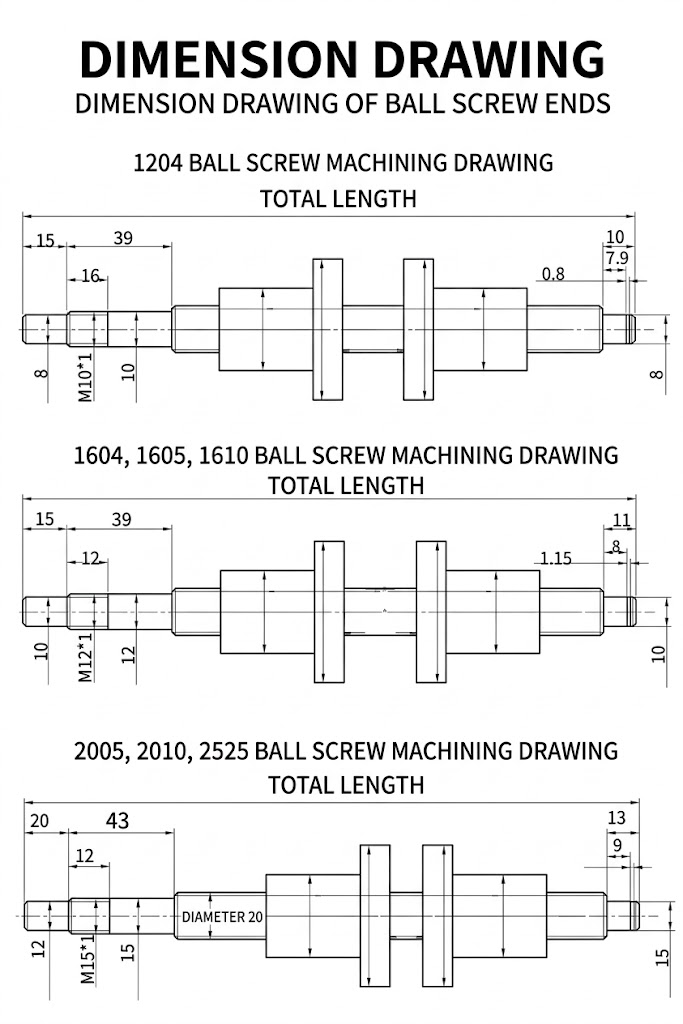
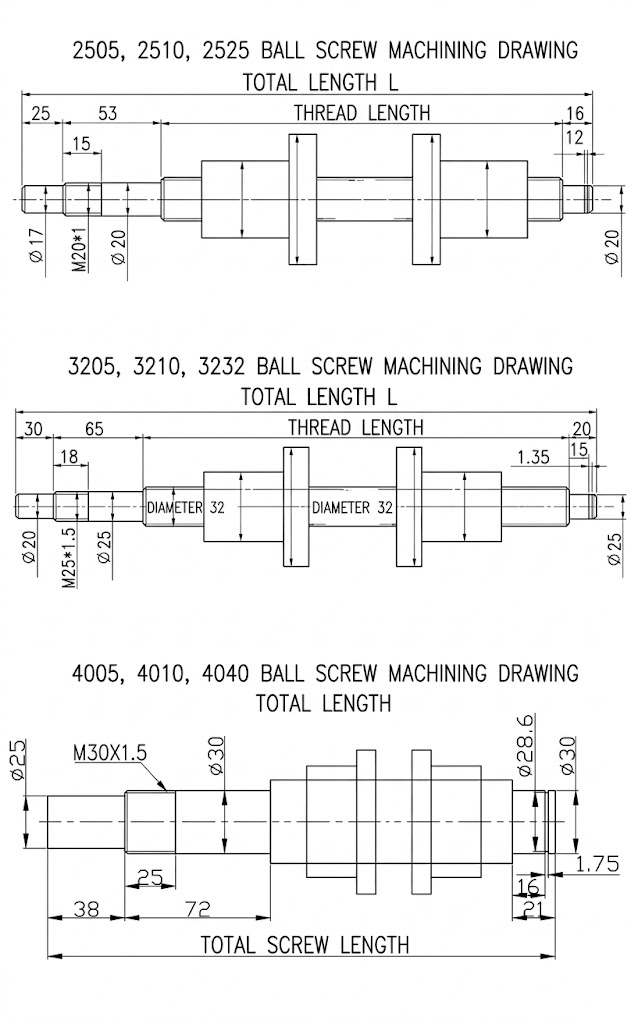
(The above drawing is for reference, have a request of machining ends please send email to sales@robotdigg.com for further.)
Common Applications
Self-Centering Vises & Clamps: CNC machining fixtures, automated centering vices, and workpiece holding systems.
Grippers & Linear Actuators: Robotic end-effectors, bi-directional grippers, and electric cylinders.
Width Adjustment Mechanisms: Automated conveyor belt width adjustments, packaging machines, and material slitting lines.
Optical & Medical Equipment: Precision lens centering stages and symmetrical alignment tools.